
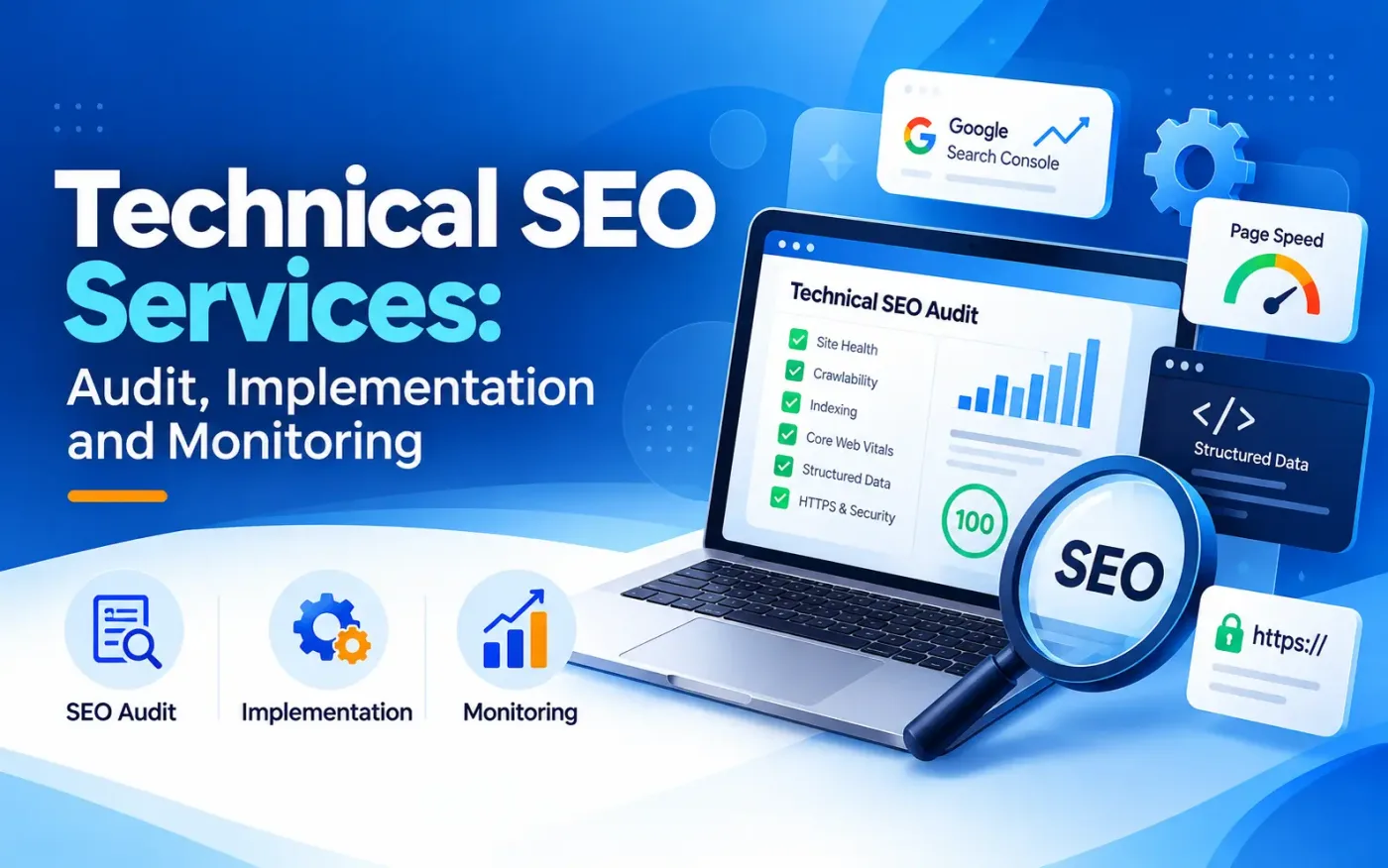
Technical SEO audit services from CodeWebApp. We find crawl, indexing, speed and schema issues, then fix them with your developers. Book a consultation.
Your pages can have strong content and still lose search traffic when Google cannot crawl, render or index them properly. Our technical SEO services find those blockers, rank them by business impact and fix them with your developers. If you want technical SEO audit services that end in working fixes instead of a report nobody opens, start here.
Code Web App is a New Delhi team of SEO specialists and developers, working with businesses across India.
Book a Technical SEO Consultation
What are technical SEO audit services?
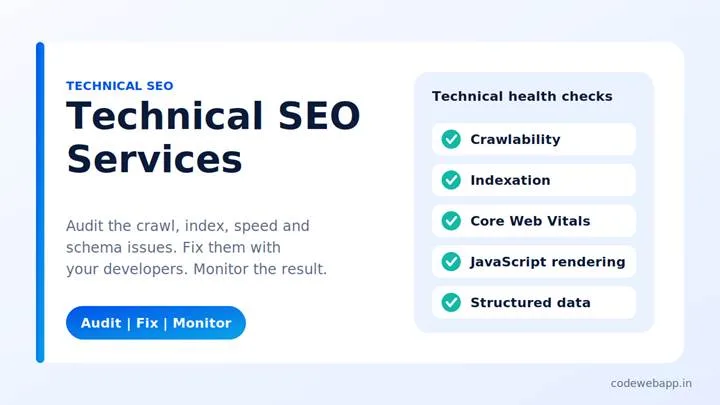
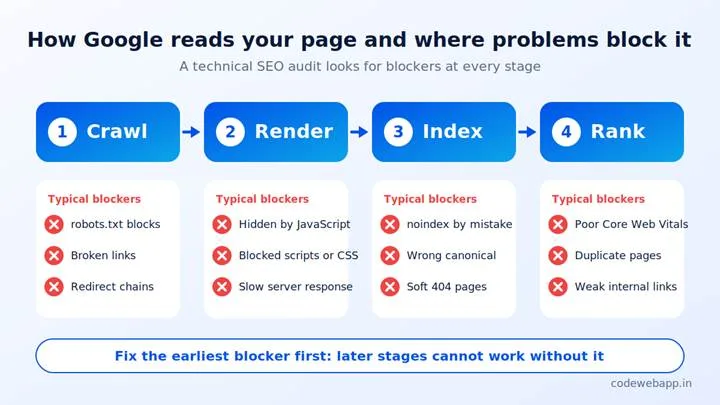
Technical SEO audit services check whether search engines can crawl, render, index and understand your website. The audit covers site structure, indexation, page speed, structured data, duplicate content and server responses. You get a prioritised list of problems, what each one costs you in visibility and the exact fix. A good technical SEO audit service also tells you which findings to ignore.
How do you know your website needs technical SEO?
Check for these signs:
- Pages are not indexed. Open Google Search Console, go to Pages and read the "Why pages aren't indexed" list.
- Traffic fell after a redesign, migration or platform change. Old URLs without redirects are a common cause.
- New pages take weeks to appear. Weak internal links or a stale sitemap often explain it.
- Pages feel slow on phones. Check the field data in PageSpeed Insights, not only the lab score.
- Google shows the wrong title or URL. Canonical tags may be conflicting.
- Page source looks empty. Content loaded only by JavaScript can be missed or indexed late.
If two or more apply to you, a technical review is worth more than another batch of blog posts.
Which Search Console messages point to technical SEO problems?
Open Google Search Console, go to Pages and look for these statuses. Each one has a sensible first step.
- Discovered, currently not indexed. Google knows the URL but has not crawled it yet. Add internal links from related pages, remove thin pages and list only canonical URLs in the sitemap.
- Duplicate, Google chose different canonical than user. Two addresses show the same content. Set a self referencing canonical on the page you want ranked and redirect the other version.
- Soft 404. The page returns a normal status but looks empty or unhelpful. Add real content, or return a proper 404 or 410 if the page should not exist.
- Page with redirect. Chains of redirects waste crawl effort. Point each old URL straight to its final address with one 301.
- Poor LCP on mobile. In the Core Web Vitals report, open the failing URL group. Compress the main image, preload it and cut scripts that block rendering.
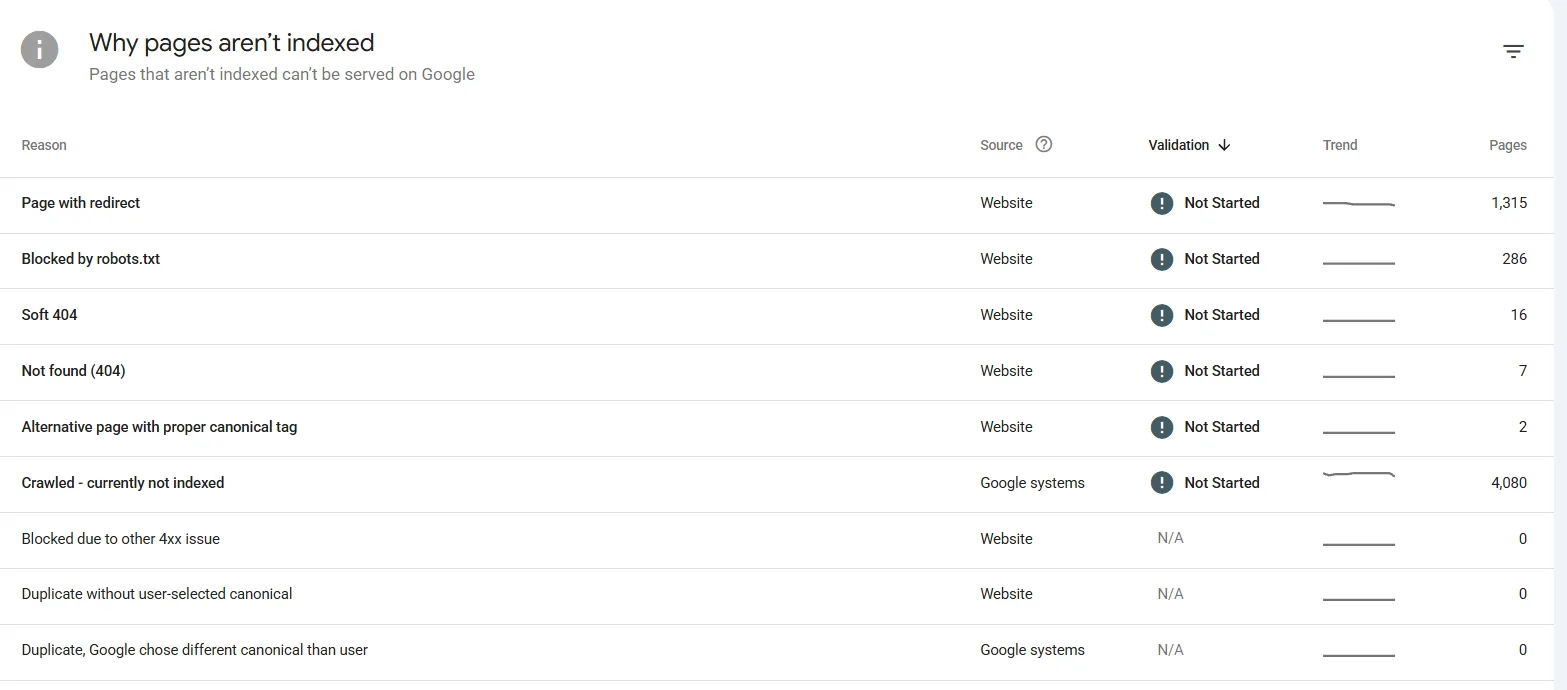
These checks take minutes and often explain a lot. When the list is long or the cause is unclear, that is when a full audit pays for itself.
What does our technical SEO audit include?
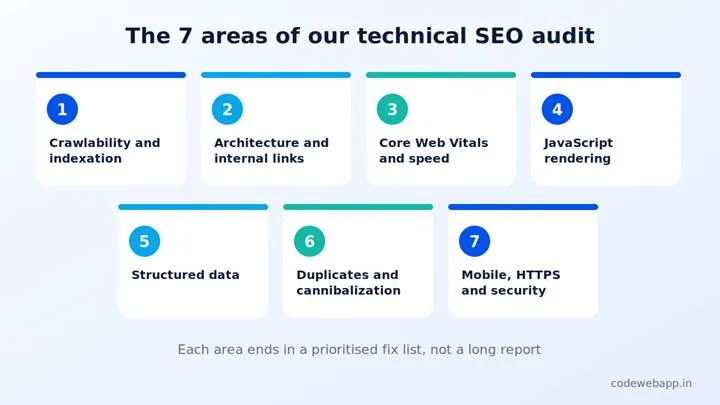
Our technical website SEO audit service covers seven areas.
Crawlability and indexation
We crawl the site with Screaming Frog and compare the result with Search Console. We check robots.txt, XML sitemaps, noindex tags, canonicals, redirect chains, status codes and orphan pages, meaning pages with no internal link pointing to them.
Site architecture and internal linking
We map click depth, anchor text and link flow. Important service pages should sit within three clicks of the homepage and receive links from related pages.
Core Web Vitals and page speed
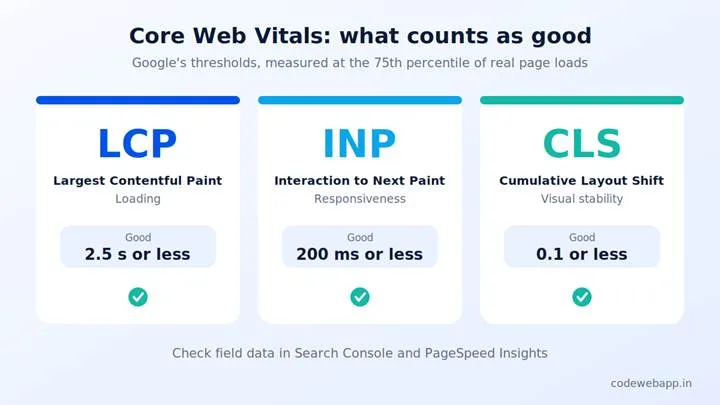
We measure Largest Contentful Paint, Interaction to Next Paint and Cumulative Layout Shift on your key templates. Typical fixes include modern image formats, preloading the main image, removing render blocking scripts and reserving space for late loading elements.
JavaScript rendering
We compare the raw HTML with the rendered page. If your headline, prices or counters appear only after scripts run, crawlers and AI tools that read HTML may never see them.
Structured data
We check Organization, WebSite, Service, BreadcrumbList and FAQ markup in the Rich Results Test. Markup must match visible content, and URLs inside it must match your canonical domain.
Duplicate content and keyword cannibalization
We find pages competing for the same query and decide which page should own it. The others get a clearer purpose or a link to the winner.
Mobile usability, HTTPS and security
We test tap targets, viewport settings, mixed content, security headers and certificate setup.
Button: Get a Technical SEO Audit (link to /contact)
Why an audit alone does not fix rankings
Many reports end as a PDF that sits in a folder. Because our SEO specialists and developers work in one team, each finding becomes a ticket with the URL, the rule being broken and the expected result. We implement fixes on Laravel, WordPress, Shopify, React and Next.js sites, or pass the tickets to your own developers.
These technical SEO audit and implementation services shorten the gap between finding a problem and watching Google recrawl the fix. You can also choose audit only, audit with implementation, or ongoing monitoring.
What did we find when we audited our own website?
We run the same checks on our own site. These findings came from our homepage and service page review:
- The homepage title and heading had no service keyword. A generic title tells Google little about the page. The fix: build the title and H1 around the single topic that page should own.
- Animated counters showed zero in the raw HTML. Crawlers saw "0+" instead of the real numbers. The fix: print the final value in the HTML, then animate it.
- Service card images had empty alt text. The images carried text that search engines could not read. The fix: write a short descriptive alt for each one.
- The hero image was a PNG. WebP or AVIF loads faster and helps Largest Contentful Paint. The fix: convert, compress and preload it.
- One internal link pointed to a misspelled URL. That sends visitors and crawlers to an error page. The fix: correct the link and add a 301 redirect from the wrong address.
- A service page covered topics that already had their own pages. That splits ranking signals. The fix: keep a short summary and link to the dedicated page.
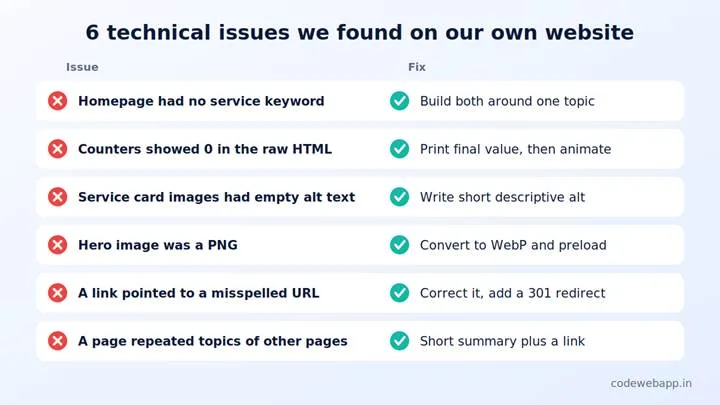
None of these is unusual. They are what a fast growing site collects, which is why a repeat audit matters.
How do our technical SEO auditing services work?
- Scoping. We agree goals, key pages and access to Search Console, GA4 and a staging site if one exists.
- Data collection. We crawl the site, export Search Console data and pull field data from PageSpeed Insights.
- Prioritisation. We score each issue by impact and effort so the first fixes matter most.
- Fixes. We implement them or hand developer ready tickets to your team.
- Recrawl and monitoring. We recrawl, confirm the fixes and track indexation and Core Web Vitals in Search Console.
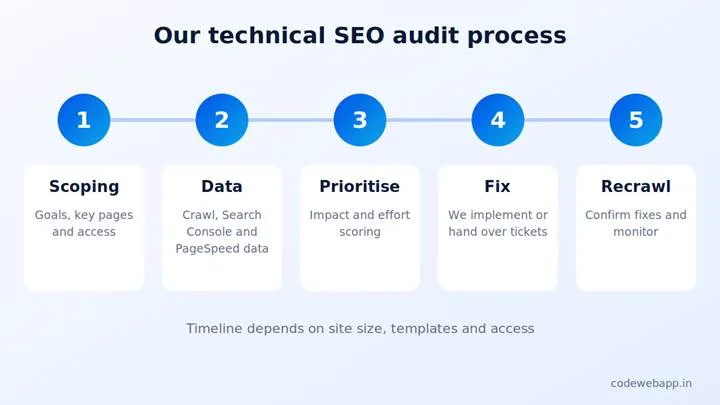
The timeline depends on site size, templates and access. We confirm it in writing before work starts.
What will you receive?
- A prioritised issue sheet with impact, effort and owner for each item
- Full crawl exports for reference
- Developer ready tickets with URLs, examples and expected results
- A Core Web Vitals and structured data summary
- A walkthrough call in plain language
- A recrawl check after the fixes go live
Who needs technical SEO services?
Online stores with large catalogues, WordPress sites running many plugins, websites built on JavaScript frameworks, businesses that recently redesigned or migrated, and companies with many service or location pages usually benefit most. Small sites with clean structure often need a lighter review, and we will say so.
Should you hire a technical SEO consultant or a team?
A technical SEO audit consultant suits a one time review when you already have developers who can implement. A team suits you when you need fixes shipped and tracked. You may outsource technical SEO audit services when you have neither an in house SEO nor a developer free for the work.
Ask any technical SEO audit service company four questions: which tools do you use, can I see a sample report, who implements the fixes, and how do you measure results?
How much do technical SEO audit services cost?
Cost depends on the number of URLs, how much JavaScript the site relies on, catalogue size, and whether you want implementation and monitoring. A 40 page business site and a 20,000 URL store are different jobs. We quote after a short review of your site, so you know the scope before you commit.
